

How to open a bank account in italy as a foreigner

I’ll be honest—when I moved to Italy, I thought opening a bank account would be straightforward. I mean, how hard could it be, right? I had a passport, some money, and a positive attitude. Turns out, I was incredibly naive.
The reality hit me about two weeks in. My landlord sent me a polite but firm message saying he needed rent via bank transfer—no cash, no exceptions. My gym wouldn’t accept my foreign card. Even the phone company looked at me skeptically when I couldn’t provide an Italian IBAN. I was stuck, frustrated, and honestly embarrassed that I hadn’t sorted this out sooner.
Why You Need a Bank Account in Italy as a Foreigner
Look, I tried to convince myself I didn’t need an Italian bank account. I had my international card, I could withdraw cash, it would be fine. Except it wasn’t fine at all.
The ATM fees alone were killing me—sometimes €5 just to take out €50. But it was the everyday frustrations that really got to me. My landlord wanted monthly transfers.
The utility company said they could only do direct debits from Italian accounts. When I finally got a freelance gig, the client looked at me like I had three heads when I said I didn’t have an Italian IBAN.
Italy, for all its beauty and charm, runs on local bank transfers. It’s just how things work here. You can fight it, or you can accept it and move on with your life. I chose the latter.
The Documents You'll Need
This is where things got messy for me. I showed up to my first appointment thinking my passport would be enough. The bank officer looked at me kindly and said, “Do you have your codice fiscale?”
“My what?”
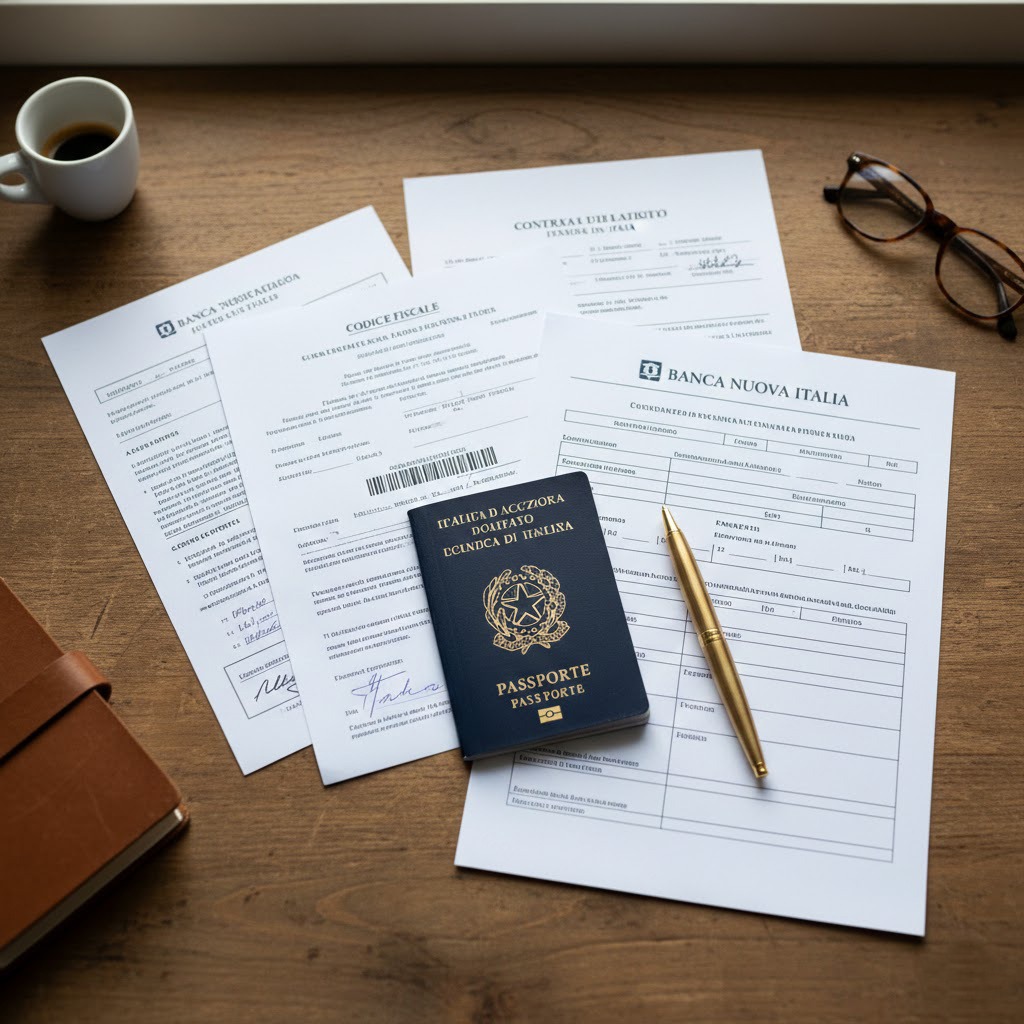
Yeah. So here’s what you actually need:
- passport
- codice fiscale (that’s your Italian tax code—more on this in a second),
- proof of address
- rental contract
- something showing why you’re in Italy, like a work contract
- university acceptance letter.
Depending on the bank, they might also ask for your visa, an Italian phone number (catch-22, I know), or even a letter from your home bank. The requirements seem to change based on the branch, the day, and honestly, the mood of whoever’s helping you.
How to Get a Codice Fiscale Before Opening a Bank Account in Italy

Nothing happens without this little piece of paper. Nothing.
What to bring:
Valid passport (original + copy)
Visa or entry stamp (if applicable)
Application form (available at the office)
Address in Italy (hotel, rental, or friend’s address)
Getting mine was actually easier than I expected. I went to the Agenzia delle Entrate—that’s the tax office—with just my passport. There was a queue (arrive early, trust me), but the whole thing took maybe 45 minutes. They printed out my codice fiscale right there, no charge, no drama.
Get this done before you even think about walking into a bank. Some tobacconists can help too, though they might charge a few euros.
Choosing the Best Bank in Italy for Foreigners
My first attempt was at a small local bank near my apartment. The guy took one look at my passport and said they “don’t really work with foreigners.” Just like that. I was stunned.
My second try was at a bigger bank. Better, but the whole process felt like they were doing me a massive favor. Plus everything was in Italian with no translation, and my Italian at that point was… survival level at best.
Finally, I went to UniCredit in the city center. Night and day difference. The woman who helped me spoke perfect English, actually seemed happy to assist, and walked me through everything. I could’ve kissed her.
From talking to other expats, UniCredit and Intesa Sanpaolo tend to be foreigner-friendly, especially in bigger cities. Online banks like Fineco and ING are easier and cheaper, but here’s the catch: some Italian landlords and institutions don’t take them seriously. They want a “real” Italian bank.
My advice? Start with a traditional bank for credibility, then maybe add a digital bank later for convenience.
Step-by-Step Process to Open a Bank Account in Italy
Let me walk you through how it went down for me.
- Week one, I got my codice fiscale. Felt productive.
- Week two, I researched banks online and got confused by contradictory information.
- Week three, I walked into two banks and got rejected or told I needed more documents.
- Week four, I finally called UniCredit and booked an appointment—first available slot was 10 days away.
On appointment day, I showed up early with a folder full of every document I owned. Passport, codice fiscale, rental contract, work contract, bank statements from home—probably my birth certificate too for good measure.
The bank officer, Francesca, went through everything methodically. She asked why I was in Italy, what I did for work, where I lived. It felt like an interview, which was weird, but I stayed polite and answered everything.
She explained the different account types, the fees (there were a lot), and what I’d receive. I just nodded and signed where she told me to sign. The appointment took about 50 minutes.
Then she said the magic words: “Your account will be active in about a week. Your card will arrive by post in two weeks.”
Two weeks later, my debit card arrived in three separate envelopes for security reasons, which seemed excessive, but okay. Three weeks after that first appointment, I made my first Italian bank transfer and honestly felt like I’d achieved something significant.
Costs and Fees for Bank Accounts in Italy for Foreigners
My account costs €7.50 per month.Not terrible, but not free either.
On top of that, I pay €2 every time I use an ATM that’s not my bank’s. International transfers are ridiculously expensive—like €15-25—so I use Wise for that instead. And when I lost my debit card at a beach in Puglia, replacing it cost €10.
Online banks are definitely cheaper, some even free, but there’s a credibility thing with traditional banks that matters here.
Common Problems Foreigners Face When Opening a Bank Account in Italy

At my second bank attempt, the guy said my documents “weren’t sufficient” but couldn’t specify what was missing. I gave up and went elsewhere. Sometimes it’s not worth the fight.
The language barrier was real. I used Google Translate constantly during meetings. Francesca was patient about it, but don’t count on English support everywhere, especially outside major cities.
I also hit the residence permit runaround. I’d applied but didn’t have it yet. The first bank said no because of this. UniCredit accepted my application receipt plus my rental contract. It depends entirely on who you talk to.
Tips to Successfully Open a Bank Account in Italy as a Foreigner
Start this process the moment you arrive in Italy. Don’t wait like I did until you desperately need an account.
Be nice to bank staff. Being polite got me so much further than the times I let my frustration show.
Make copies of everything. I went through my documents folder constantly.
Don’t be afraid to try multiple banks. The first no doesn’t mean it’s impossible—it just means that particular branch isn’t the right fit.
Final Thoughts on Opening a Bank Account in Italy as a Foreigner
Was it annoying?
Yes.
Did it take longer than it should have?
Absolutely.
But once everything was set up, life got so much easier.
- These days, paying rent takes 30 seconds on my phone.
- My salary goes straight into my account.
- I can handle utilities, buy train tickets, pay for parking.
- all the boring adulting stuff that just needs to work.
When that Italian IBAN finally showed up in my email, I genuinely felt relief. Like I’d crossed some invisible threshold from “visitor struggling with daily life” to “person who actually lives here.”
Italy has its quirks, and the banking system is definitely one of them. But it’s manageable. You’ve just got to embrace the process, arm yourself with patience and paperwork, and know that eventually, you’ll get there.
Welcome to Italy. Get ready for the best pasta of your life, questionable bureaucracy, and a bank account that makes it all possible.
Quick Answers to Questions You Probably Have
Can I actually do this as a foreigner? Yes. I did it. So have thousands of others. EU citizens have it slightly easier, but non-EU people manage it too.
What if I don’t have residency yet? You can get a non-resident account. It costs more and has limitations, but it works temporarily.
Is the codice fiscale really mandatory? Yes. Full stop. No bank will even talk to you without it.
Can tourists get accounts? Maybe? I’ve heard mixed things. Probably not worth it unless you’re staying several months.
How long does everything take? From getting the codice fiscale to having a working card? About three weeks for me.
Do I need to speak Italian? Not technically, but it helps. Bigger banks in cities usually have some English support.